
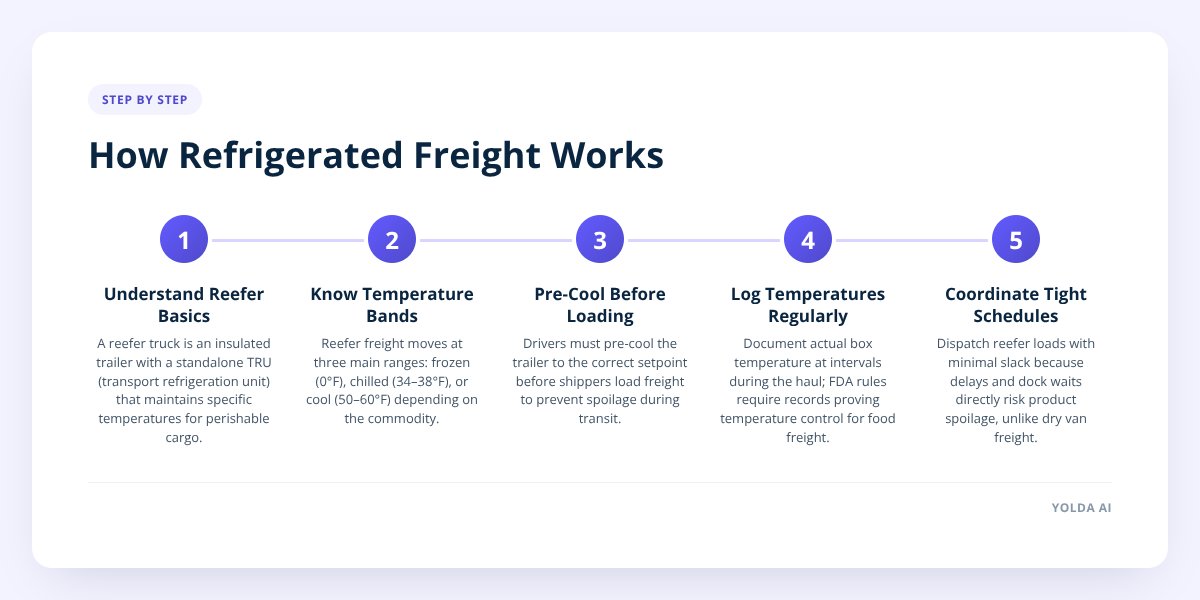
Quick answer: A reefer truck is a tractor-trailer pulling an insulated trailer with its own refrigeration unit, used to haul freight that has to stay at a set temperature — produce, meat, dairy, pharmaceuticals, and frozen goods. Unlike a dry van, the trailer carries a diesel-powered or electric cooling unit that runs around the clock, the driver has to log temperature checks, and loads are far less forgiving of delays. Dispatching reefer freight takes more coordination than dry van because a stuck load isn't just late — it can be ruined.
Key takeaways
- A reefer trailer's cooling unit, called a TRU (transport refrigeration unit), typically runs on its own small diesel engine separate from the truck's main tank.
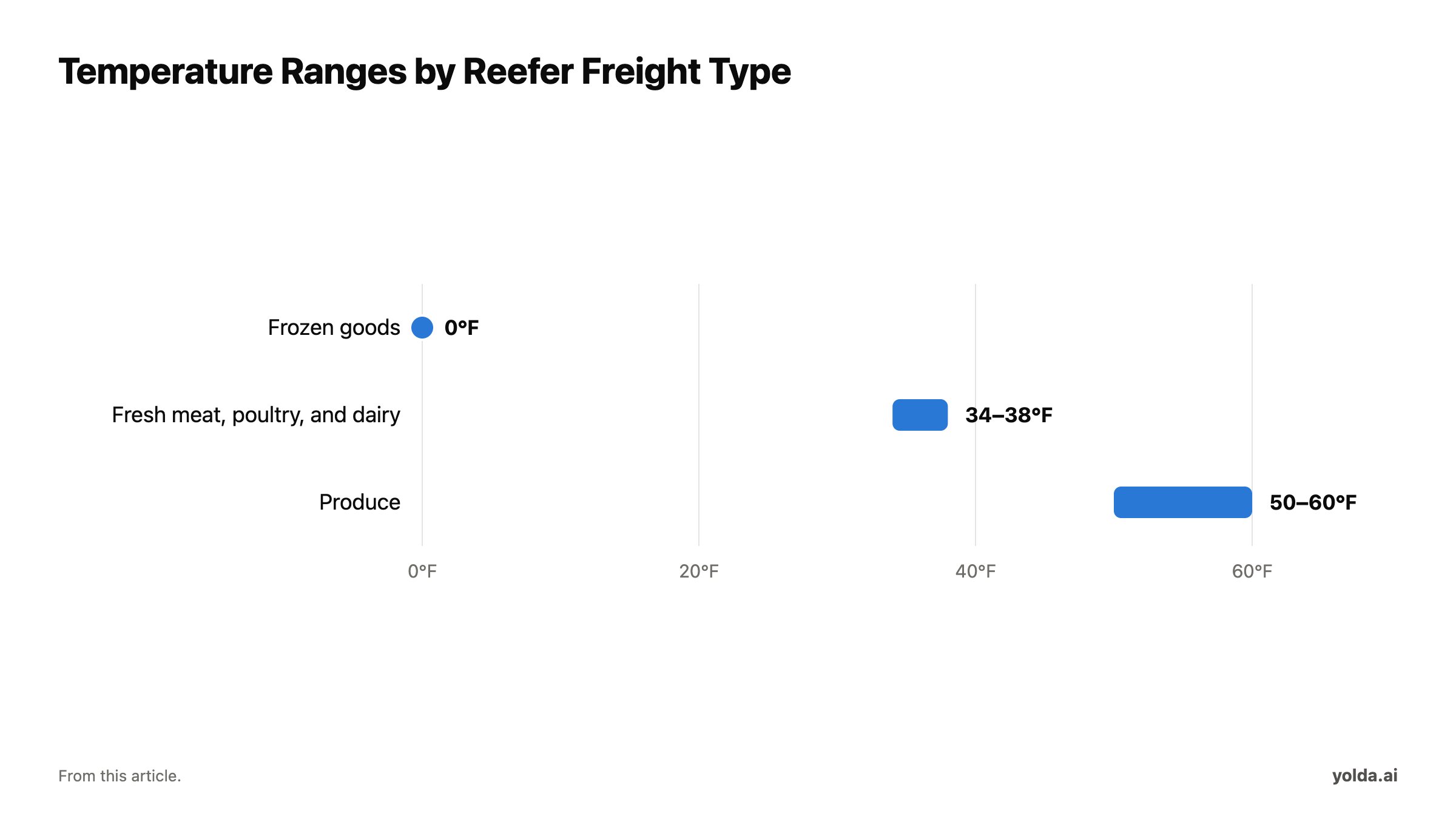
- Reefer freight commonly moves at one of three temperature bands: frozen (around 0°F), chilled/refrigerated (34–38°F for meat and dairy), or cool (50–60°F for produce like bananas).
- The Food Safety Modernization Act's Sanitary Transportation rule, enforced by the FDA, requires carriers hauling food to maintain and document temperature control — making temperature logs a compliance record, not just a courtesy.
- Reefer fuel for the trailer's unit is taxed differently than the tractor's road fuel, a distinction we cover in What Is Reefer Fuel, and Why Is It Taxed Differently?
By the numbers
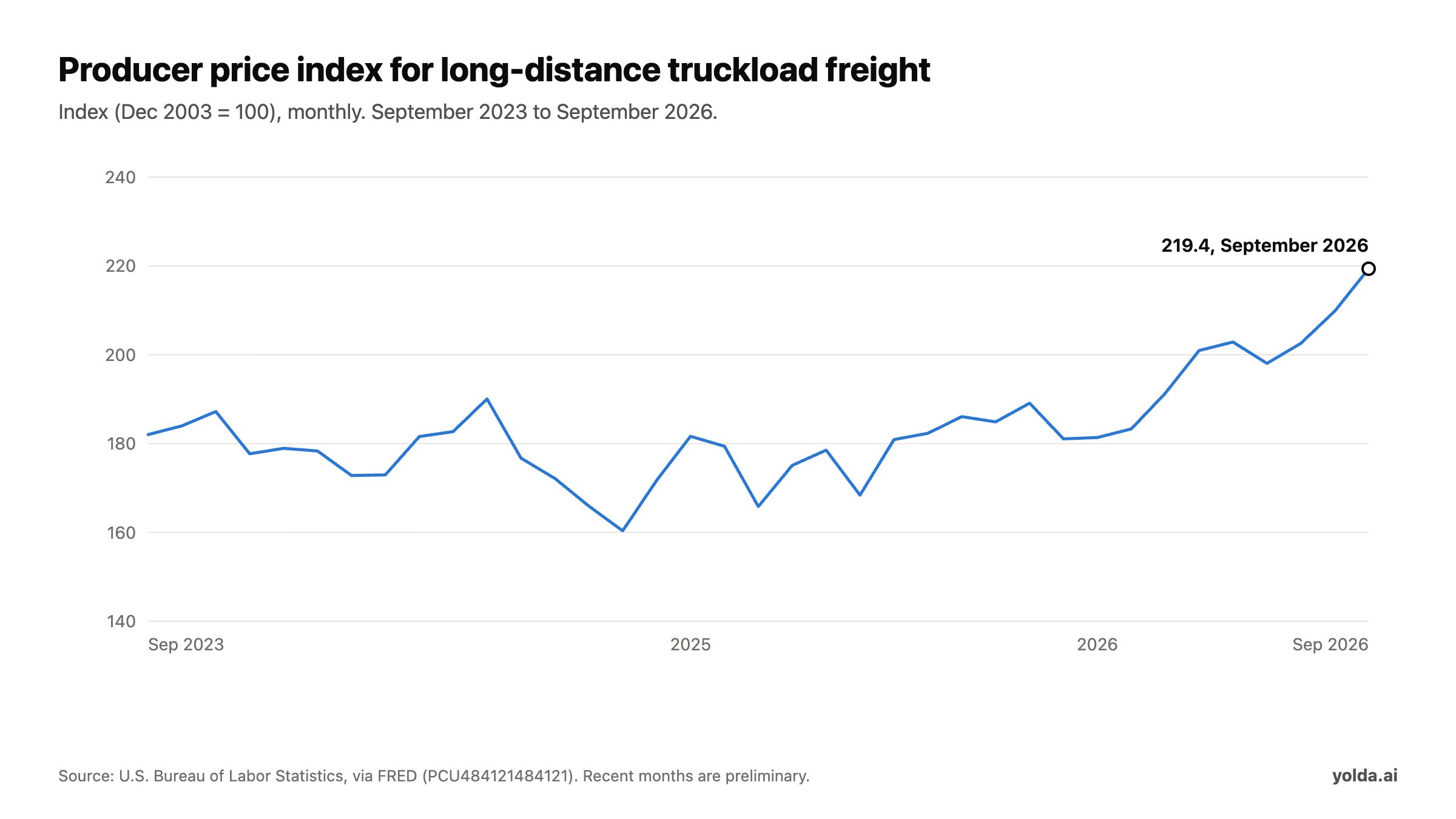
- The producer price index for long-distance truckload freight stood at 219.4 in September 2026, up 17.9% from a year earlier. That is the highest reading since the series began in 2003. Source: U.S. Bureau of Labor Statistics, FRED PCU484121484121.
Latest official data as of Oct 25, 2026. Recent months of government data are preliminary and may be revised.
What makes a reefer truck different from a dry van?
A reefer truck is a dry van with a built-in climate control system bolted to the front of the trailer. That unit — the TRU — is essentially a standalone refrigeration plant: its own engine, its own fuel tank, its own thermostat, mounted on the nose of the trailer and ducted to blow cold or warm air through the box.
A dry van trailer is just an insulated or uninsulated metal box. Freight inside rides at whatever temperature the outside air and the trailer's own heat buildup create. That's fine for furniture, paper goods, or packaged dry freight. It's not fine for a pallet of chicken breasts.
Reefer trailers also tend to have:
- Thicker insulated walls and a sealed floor to hold temperature.
- An air chute or duct running along the ceiling to push cold air to the back of the trailer.
- A separate fuel tank for the TRU, filled at a different pump than the tractor's diesel.
- Temperature recording equipment, either built into the TRU or added as a separate data logger.
Don't skip this: A reefer unit left running at the wrong setpoint, or shut off during a long dock wait, can spoil an entire trailer load in hours. Dry van freight tolerates delay. Reefer freight often doesn't.
What kind of freight moves in a reefer?
Reefer freight is almost always something that spoils, degrades, or loses potency outside a specific temperature range. The main categories carriers haul:
- Frozen goods — ice cream, frozen vegetables, frozen meat, held near 0°F.
- Fresh meat, poultry, and dairy — typically 34–38°F.
- Produce — bananas, potatoes, and many fruits ride warmer, often 50–60°F, because cold can actually damage some produce.
- Pharmaceuticals and some medical supplies — tight tolerance ranges, often with continuous monitoring required by the shipper.
- Floral freight and beverages — less strict than food or pharma, but still temperature-sensitive.
Each commodity has its own ideal range, and the rate confirmation or bill of lading should state it explicitly. A driver who doesn't know whether a load wants 28°F or 38°F is flying blind, and getting it wrong is a claim waiting to happen.
How do temperature logs work, and who checks them?
Temperature logs are a running record of the trailer's internal temperature, checked and written down (or recorded automatically) at set intervals throughout the haul. The driver is usually responsible for a pre-trip check — confirming the trailer is pre-cooled to the right setpoint before the shipper loads it — and periodic checks during transit, often at every fuel stop or rest break.
Most modern TRUs log temperature automatically on an internal data recorder, which can be pulled at delivery if there's a dispute about whether the load stayed in range. Some shippers also drop their own independent temperature logger inside the trailer with the freight, as a cross-check against the unit's own reading.
This isn't just good practice — it's a documented federal requirement for food freight. The FDA's Sanitary Transportation of Human and Animal Food rule, issued under the Food Safety Modernization Act, requires carriers transporting food that needs temperature control to maintain records showing the temperature was controlled during the trip. A carrier that can't produce that record when a receiver questions a load is in a weak position, both for the claim and for FDA compliance.
A few things carriers get caught on:
- Pre-cooling the trailer before loading, not after — loading warm product into a trailer that's still cooling down defeats the purpose.
- Writing down a setpoint instead of the actual box temperature — they aren't always the same.
- Gaps in the log during long dock delays, which look worse to a receiver than a slightly off reading.
- Confusing the TRU's return-air sensor reading with the actual product temperature deep in the pallet.
How is dispatching reefer freight different from dry van?
Reefer dispatch has less slack built in, because a late pickup or a long detention wait directly threatens the product, not just the schedule. A dry van load that sits two extra hours at a shipper is an inconvenience. A reefer load sitting two extra hours with the unit off, or cycling on a diesel-powered TRU burning down its separate tank, is a different kind of risk.
Dispatchers handling reefer freight need to track a few things dry van dispatch doesn't require:
| Factor | Dry van | Reefer |
|---|---|---|
| Pre-trip check | Trailer condition, doors, tires | Same, plus pre-cool to setpoint |
| Fuel tracking | One tank (tractor) | Two tanks — tractor diesel and TRU fuel |
| Detention risk | Delay costs time | Delay risks the product itself |
| Required documentation | BOL, POD | BOL, POD, temperature log |
| Typical lanes | General freight, retail | Produce terminals, cold storage, distribution centers |
| Setpoint communication | Not applicable | Must be confirmed with driver before dispatch |
Reefer lanes also cluster around specific freight hubs — produce terminals, cold storage warehouses, meat and poultry plants — rather than the general mix of docks a dry van driver might see. A dispatcher building a reefer network benefits from knowing those lanes and the seasonal patterns behind them, since produce freight especially swings hard with harvest seasons.
Getting a rate confirmation translated into a correctly built load — with the right setpoint, the right stop sequence, and the right reference numbers — matters more on a reefer load than almost anywhere else, because a mistake isn't just a late delivery, it's a spoiled trailer. Yolda's dispatch tool reads a dropped-in rate confirmation and builds the load draft automatically — stops, rate, and reference numbers — so a dispatcher isn't retyping a setpoint or a delivery window by hand under pressure. The live fleet map also shows ETA from the driver's phone, which matters when a receiver is asking how close a cold load is to the dock.
Does a reefer truck need any different licensing or compliance setup?
No — the CDL and USDOT requirements for a reefer truck are the same as for any tractor-trailer of the same weight class. A combination with a gross combination weight rating of 26,001 pounds or more, where the trailer's GVWR exceeds 10,000 pounds, requires a Class A CDL under 49 CFR 383.91, same as it would for a dry van or flatbed of the same size.
Where reefer freight differs is in the operational compliance layer stacked on top:
- Food Safety Modernization Act temperature-control recordkeeping, enforced by the FDA, for carriers hauling food.
- Reefer fuel's separate tax treatment, since fuel burned to run the TRU — not to move the truck down the road — isn't counted the same way IFTA counts road fuel. We walk through that distinction in What Is Reefer Fuel, and Why Is It Taxed Differently?
- Standard DOT compliance items — CDL, medical card, registration, inspection — apply exactly as they would to any interstate carrier.
A fleet running mixed dry van and reefer trailers still needs the same compliance tracking either way: CDL expirations, medical card renewals, inspection dates. Yolda's safety tracking watches those dates automatically across the whole fleet and sends an alert before anything lapses, regardless of what's hitched behind the tractor.
Where reefer freight pricing and risk diverge from dry van
Reefer rates typically run higher per mile than dry van, and that premium reflects real added cost and risk, not just market pricing. The TRU itself burns fuel around the clock, even when the truck is parked, which is a cost dry van carriers simply don't carry.
Claims exposure is also different in kind, not just degree. A dry van claim is usually about damaged freight — a dented box, a torn case. A reefer claim is often about an entire trailer load that's unsellable because it sat two degrees too warm for six hours, even if nothing looks visibly wrong. That makes the temperature log the single most important document on the load, more than the POD in some disputes.
Carriers new to reefer freight sometimes underprice loads because they're quoting off dry van instinct. A reefer quote should account for the TRU's separate fuel burn, the tighter service windows most reefer shippers demand, and the higher stakes if something goes wrong in transit.
Yolda is a TMS built to run a trucking company's dispatch, compliance, and back office from one login, whether the fleet runs dry van, reefer, flatbed, or a mix. Book a demo or start a free trial to see how it handles load-building and compliance tracking for a reefer operation.
Checklist: Setting up a reefer load before dispatch
- Confirm the required temperature range from the rate confirmation or shipper instructions.
- Pre-cool the trailer to setpoint before arriving at the shipper, not after loading starts.
- Record the trailer's starting temperature before the doors close.
- Check and log the temperature at every stop or fuel break during transit.
- Track the TRU's separate fuel tank level alongside the tractor's diesel.
- Confirm detention and waiting-time terms with dispatch before accepting a tight-window load.
- Photograph or log the temperature reading at delivery before the receiver breaks the seal.
- Keep the temperature log with the POD in case of a claim dispute.


